


High quality backlinks help rankings, drive keywords up, and keep your best pages visible longer. When links come from relevant, trusted publications and sit naturally inside editorial content, Google treats your site as a credible source.
For SaaS, B2B, and enterprise brands, the effect compounds meaning buyers research deeply, evaluators compare options, and analysts cite authoritative references.
Earn the right links and you influence those journeys.
In this guide, you’ll get eight proven tactics that push priority keywords to the top without shortcuts: expert sourcing, skyscraper content, linkable assets, strategic guest posts, resource insertions, partnerships, broken link reclamation, and digital PR.
Each tactic includes vertical-specific plays you can deploy immediately, plus clear metrics to track lift and decide what to scale next.
In this article…
- 1. Go-To Expert Source a.k.a Journalist Requests
- 2. Publish Deep Skyscraper Resources
- 3. Build Linkable Assets (Data, Tools, Studies)
- 4. Strategic Guest Posting on High-Authority Niche Sites
- 5. Get Added to Resource & Best Of Pages
- 6. Content Partnerships & Co-Marketing (Joint Studies, Roundtables)
- 7. Replace Broken Links & Reclaim Mentions
- 8. Digital PR & Newsworthy Content Campaigns
- Conclusion
- FAQ – High Quality Backlinks
Key Takeaways
- Broken link building targets existing editorial gaps by replacing dead links with your relevant content.
- Personalized, concise outreach emails dramatically increase reply rates.
- SaaS and B2B industries benefit most from broken link building
- Using the right tools (Ahrefs, Screaming Frog, Hunter.io, BuzzStream) streamlines finding opportunities and managing outreach at scale.
1. Go-To Expert Source a.k.a Journalist Requests
Provide quotable expertise to reporters and niche editors so your brand earns natural, contextual citations.
These editorial backlinks help rankings and push priority keywords upward especially in SaaS, B2B, and enterprise. Want a fast, repeatable system? Read on.

Publishers need accurate, ready-to-use insights. Become a source for reporters and bloggers is working in 2025 via Featured, HARO, and journalist outreach.
Ahrefs defines quality links as relevant, editorially earned, and supported by on-topic anchors exactly what expert quotes generate.
In late 2024 Cision discontinued Connectively (HARO’s rebrand), then in April 2025 sold HARO to Featured.com, where many editors now post questions and compile expert answers.
Aligning with these workflows wins placements that drive keywords up while staying firmly white-hat.
Pitch essentials (use in every reply):
- One-line credibility (name, role, niche authority)
- A 2–3 sentence quote plus a concrete example
- One attributable stat and the source
- A non-promotional, context-matched target URL (glossary, research)
Editors select quotes that are specific, sourceable, and easy to paste.
Keep your first sentence on the journalist’s exact angle, avoid sales language, and propose the single page that best deepens reader understanding (definition, benchmark, calculator).
This increases acceptance and passes stronger topical signals.
| Signal | What editors prefer |
| Relevance | Subject-matter expertise that matches the brief |
| Verifiability | Clear stat + cited source |
| Link context | Natural anchor text pointing to a helpful resource |
Build a fast daily rhythm and measure wins.
- Scan Featured/HARO-style requests twice daily; triage by topical fit.
- Paste a modular quote, tailor one example, attach bio + headshot.
- Log placements; track rank lift for linked pages and double down on outlets that convert.
2. Publish Deep Skyscraper Resources
Create the definitive guide, dataset, or tool on a focused topic, then promote it to sites already linking to weaker pages.
These standout resources earn editorial links that help rankings and push priority keywords upward especially in B2B and SaaS.

Image Source: Ahrefs Skyscraper Technique Article
The Skyscraper Method is simple: find link-worthy content, make something significantly better, and reach out to the right people.
It works because you’re upgrading content that already attracts links so outreach has a head start. Add original data, stronger structure, fresher examples, and visuals that clarify complex ideas.
For search quality, prioritize topical relevance and natural anchors; a few high-quality, on-topic links outrank dozens of generic ones. This approach remains a cornerstone tactic and is still recommended by leading SEO resources.
Asset blueprint:
| Asset Type | Data Source | Outreach Angle | Best Link Target |
| Benchmark report | Your product data + survey | “New 2025 stats replace outdated figures” | Research hub |
| Glossary mega-guide | SMEs + standards docs | “Clear definition + decision checklist” | Term page |
| Calculator/tool | Pricing/usage models | “Embed-worthy utility for readers” | Tool page |
| Framework/playbook | Customer case syntheses | “Battle-tested steps practitioners use” | Method guide |
Run a tight build sprint that ships and promotes, not just “perfects.” Focus on the pages that already rank and attract links; your job is to produce the better, fresher, more useful version and show it to the linkers.
- Identify winners: Find pages with many referring domains for your topic; note who links to them.
- Outdo on value: Add missing sections, proprietary stats, and clearer UI/UX (TOC, jump links, diagrams).
- Tighten relevance: Map each section to a keyword cluster; avoid fluff and keep anchors descriptive.
- Ship updates: Publish, internally link, and ensure fast load + clean schema.
- Promote with precision: Pitch the exact domains that linked to the older pieces and explain the upgrade.
For verticals BlueTree serves (SaaS, cybersecurity, fintech, cloud), “skyscrapers” excel when they solve real evaluator questions: pricing benchmarks, zero-trust rollouts, interchange economics, or Kubernetes cost controls.

Editors prefer sources that are reputable, relevant, and genuinely helpful that is criteria your upgraded assets meet when they include clear definitions, verifiable stats, and non-promotional link targets.
That combination earns editorial links that drive keywords up and sustain visibility.
Metrics to watch:
- Referring domains gained to the asset
- Rank change for the asset’s primary term
- Outreach conversion rate (replies → links)
- % links with on-topic anchors and traffic
3. Build Linkable Assets (Data, Tools, Studies)
Create an asset people need to cite such as original data, calculators, or definitive glossaries and put it where editors can reference it fast.
These assets earn editorial links that help rankings and push priority keywords upward.
Editors and bloggers link to sources that clarify, quantify, or shortcut work. That’s why data-backed pages, calculators, and well-structured definitions attract consistent citations.

A few high-quality, topically relevant links usually outperform dozens of weak ones, so concentrate on assets that answer precise questions and are easy to reference (tables, clear headings, methodology).
This aligns with guidance from leading SEO resources that emphasize relevance, editorial placement, and practical utility for earning links.
| Asset Type | Why It Gets Links | Best KPI | Vertical Example |
| Benchmark/Study | Fresh stats journalists can cite | Referring domains per release | “2025 SaaS Free-to-Paid Benchmarks” |
| Calculator/Tool | Embeddable utility for decision-makers | Assisted links from mentions | “SOC 2 Cost & Timeline Estimator” |
| Glossary/Definition | Clear, quotable term explanations | Links to term page | “What Is Zero Trust? (+ Diagram)” |
| Framework/Playbook | Actionable steps practitioners share | Links from guides/roundups | “Kubernetes Cost Control Framework” |
Build for usefulness, then prove it with real examples, visuals, and methods. Cite sources, show assumptions, and keep the layout scannable so editors can lift a stat or definition without editing.
Long-form, actionable content tends to attract more backlinks over time especially when you update it on a cadence.
- Pick the gap: Identify top-linked pages on your topic and list what’s missing (recent stats, examples, calculator).
- Ship the asset: Publish with a table of contents, clean headings, and a methods section for credibility.
- Seed distribution: Pitch sites already linking to weaker resources and explain your upgrade in one sentence.
- Embed hooks: Offer CSV downloads, charts, or a mini widget – easy to cite, easy to embed.
- Refresh cadence: Update quarterly; re-pitch with new findings to keep links compounding.
Before outreach, sanity-check quality signals so links stick and pass more context.
- Topical relevance between asset and target audience
- Clear, quotable nuggets (stats, definitions, formulas)
- Non-promotional tone and natural anchor options
- Visible methodology or inputs (trust and verifiability)
- Fast load, mobile readability, and internal links to related terms
4. Strategic Guest Posting on High-Authority Niche Sites
Write for respected, topic-relevant publications and earn contextual links inside the body copy.
Done right, guest posts help rankings and push priority keywords upward without tripping spam alarms. Want the precise filters and workflow? Keep reading.
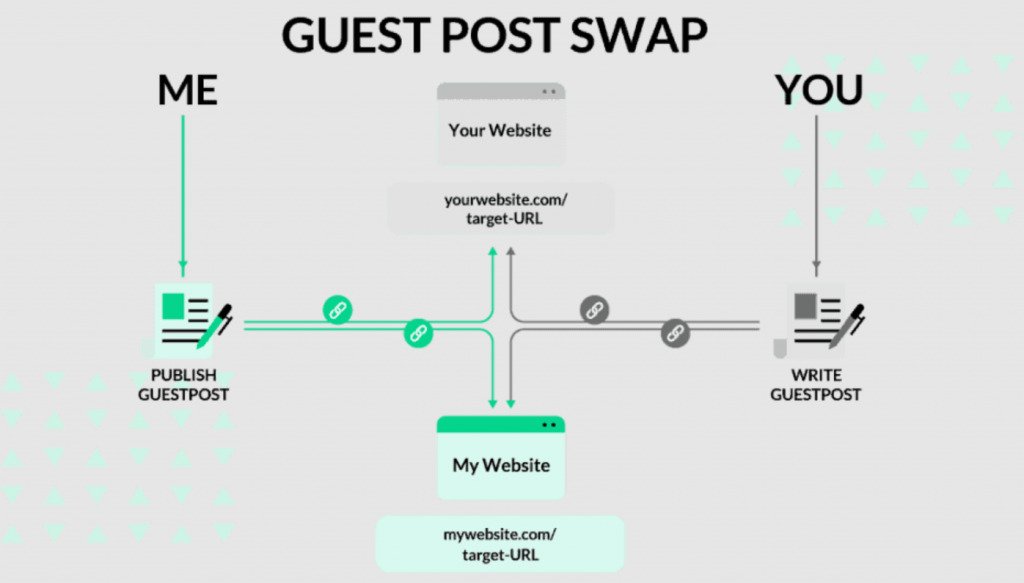
Guest posting still works if you prioritize topical relevance, editorial standards, and genuine value.
Leading SEO resources affirm it’s widely used and effective for exposure and links, while Google’s spam policies warn against large-scale, manipulative campaigns or keyword-stuffed anchors.
The modern play is quality over volume: publish fewer, stronger articles on outlets your buyers actually read.
| Target-Qualification Cheatsheet | What “Good” Looks Like | Why It Matters |
| Topical relevance | Same industry/subtopic as your page | Aligns signals and passes context |
| Real audience | Measurable organic traffic & engaged readership | Avoids dead domains and link farms |
| Editorial integrity | Clear guidelines, human editing, no link selling | Reduces risk under Google’s policies |
| Link context | Natural in-text placement to a helpful resource | Stronger, more durable equity transfer |
Pitch practitioner content: a Kubernetes cost-control playbook for cloud, a zero-trust implementation checklist for cybersecurity, or interchange mechanics explained for fintech.
These angles earn contextual citations because they solve real evaluator problems and match the publisher’s audience. Mailchimp notes guest posts as a viable way to gain backlinks when links are integrated organically and the article genuinely helps readers.
- Source targets: Find niche sites your buyers read; validate topical fit and traffic. Use past linking behavior as a signal.
- Pitch tight: Propose one outcome-driven title + 3 bullets of takeaways; mention the audience problem you’ll solve.
- Write for editors: Lead with an answer, show data/examples, and link once to the most relevant resource (glossary, research, tool).
- Stay compliant: Avoid exact-match anchors, sitewide bios as your only link, and any paid/scale footprints.
- Measure & iterate: Track placements, anchor diversity, and rank lift on the linked page; double down on outlets that move keywords.
If you’re planning a sustained program for enterprise brands, align topics to buyer-stage content and establish a quarterly placement cadence.
5. Get Added to Resource & Best Of Pages
Ask curators to include your best guide, tool, or study on their resource or roundup pages.
These editorial insertions help rankings and push priority keywords upward. Want the exact operators, angles, and outreach line that gets the “yes”?
Resource and roundup pages exist to link out so curators maintain lists of the best guides, tools, and stats in a niche. That’s why this tactic converts: you’re aligning with the page’s purpose.
Use Google operators to uncover pages like site:.edu “resources” + your topic or “best tools” + your topic, then pitch a fit-for-purpose asset (glossary, calculator, benchmark).
Keep it white-hat by avoiding paid placements and ensuring anchors are natural.
| Page Type | How to Find (sample operator) | What to Pitch |
| Industry resource pages | intitle:resources “your topic” | Definitive glossary or starter guide |
| “Best tools” lists | “best” AND “tools” AND “your topic” | Free calculator, ROI/TCO tool |
| Weekly roundups | “link roundup” + “your topic” | Fresh research or frameworks |
| EDU/NGO lists | site:.edu OR site:.org “resources” “your topic” | Non-promotional primers or studies |
Editors say yes when your pitch reduces their work: clear title, 1-line value, and a clean URL that deepens their page.
Many roundups explicitly invite suggestions, so a short, benefits-first email often secures the add within a week.
- Prospect: Pull 25–50 pages with the operators above; tag by topical match and authority.
- Match asset: Assign the single most relevant page (definition, tool, benchmark) to each prospect.
- Pitch short: “Saw your [page]. We published a [asset] that covers [gap] – useful for readers comparing [topic].”
- Track results: Log replies, placements, anchors, and rank lift on your linked page.
- Refresh & re-pitch: Update stats quarterly; revisit the same curators with new value.
6. Content Partnerships & Co-Marketing (Joint Studies, Roundtables)
Team up with complementary brands and publishers to co-create assets both audiences want. This can include reports, tools, webinars and it earns natural citations from every participant’s site.

Partnership content works because it bundles three link triggers in one move: relevance (you and your partner share the same audience), authority (two brands vouching for the asset), and editorial placement (announcements, show notes, resource hubs).
Editorial links carry more weight than generic placements exactly what co-marketing produces when each party publishes and references the asset on their owned properties.
Use this to win durable links from announcement posts, recap blogs, and resource pages tied to the event or study.
Partnership formats that convert:
- Annual benchmark reports with a complementary vendor (shared data, dual launch)
- Practitioner roundtables or webinars (transcripts, show notes, recap posts)
- Integration playbooks with tech partners (co-branded how-to guides)
- Industry “state of” surveys with media outlets (newsroom citations + asset hub)
When you plan the asset, design multiple link surfaces: a primary hub page, a press/announcement page for each brand, and a recap or glossary that editors can cite independently.
Keep anchors natural and point to the most context-matching page (e.g., research hub, methodology, calculator).
| Partner Type | Co-Asset | Link Opportunities | Vertical Example |
| Complementary SaaS | Annual benchmark report | Dual announcements; data glossary | “2025 PLG Conversion Benchmarks” |
| Media/Community | Expert roundtable + transcript | Event page; recap; newsletter archive | “Zero-Trust Exec Roundtable” |
| Tech Integration | Implementation playbook | Docs hub; partner resource page | “CRM + CPQ Rollout Guide” |
| Analyst/Consultancy | “State of” report | Research library; citations | “Fintech Interchange Trends 2025” |
Give partners an easy path to publish, then run a clean, light-touch outreach to industry roundups once the asset is live.
Editors cite what’s specific, verifiable, and useful so include methods, clear definitions, and a one-line “why it matters” summary per section.
- Pick the partner: Adjacent audience, non-competing offer, topical overlap. Validate with prior content fit.
- Define the asset: Choose one format and set hard dates. Draft a one-page spec with outcomes and link targets.
- Split the work: One brand leads research/production, the other leads promotion/events; both publish.
- Ship three surfaces: Hub (canonical), announcement (each brand), recap/FAQ (quotable nuggets).
- Measure & iterate: Track referring domains, anchor diversity, and rank change on the hub page; repeat quarterly.
7. Replace Broken Links & Reclaim Mentions
Find pages linking to dead resources or citing you without a link, then offer the correct, helpful URL.
These quick wins help rankings and push priority keywords upward especially on glossary, research, and tool pages.
Broken link building means locating a 404’d resource that a page links to and asking the editor to swap in your superior, working page.

Link reclamation recovers links you previously had, while “unlinked mentions” turns plain-text brand mentions into live citations. Together, these moves capture authority you’ve already earned.
Priority targets: industry resource pages, stats lists, old “ultimate guides,” vendor directories, conference recaps, and news posts that cite out-of-date sources or mention your brand without linking.
Validate fit with topical relevance and a non-promotional target page (definition, benchmark, calculator).
Editors respond when you make fixes effortless and value-first. In your email: identify the exact dead URL, describe the reader impact (404), and offer a tighter, up-to-date resource.
For reclamation, reference the original link and give the precise replacement destination. This aligns with best-practice guidance to provide relevance, editorial placement, and a better user experience.
| Opportunity | How to Find | Pitch Angle | Vertical Example |
| Broken external links | Check resource pages; spot 404s with a crawler or Ahrefs | “Found a dead citation – here’s a current replacement” | “Zero-Trust Guide 2025” for cybersecurity |
| Lost backlinks | Ahrefs > Site Explorer > Backlinks > Lost; filter by reason | “Looks like our link broke during a refresh – here’s the correct URL” | Moved SaaS glossary URL |
| Unlinked mentions | Search/monitor brand mentions; confirm no link | “You already cited us – linking helps readers verify the source” | Fintech pricing study mention |
Keep the process tight and measurable.
- Prospect: Pull 25–50 pages: find 404s on niche resources; surface lost links and unlinked mentions.
- Map targets: Choose the single most relevant replacement (glossary, research, tool).
- Pitch short: Subject: “Quick fix on your [page]”; cite the dead URL and your better source.
- Track outcomes: Log placements, anchors, and rank lift on the linked page; prioritize outlets that convert.
8. Digital PR & Newsworthy Content Campaigns
Launch stories editors want to cover such as original data, timely angles, and clear takeaways so you earn authoritative media citations.
Journalists repeatedly say they want credible data, clear angles, and paste-ready facts.

Muck Rack’s 2025 State of Journalism underscores the value of data-driven pitches, while Cision’s 2024 State of the Media reports that 72% of journalists still value press releases as preferred content.
This is proof that structured, newsworthy announcements work when they’re genuinely useful.
Pair a press-ready dataset with a concise narrative and you’ll secure coverage and links from relevant outlets, not just syndication feeds.
News triggers editors actually cover:
- Fresh, proprietary stats that update outdated benchmarks in your niche
- Clear industry impact (“What changed, who’s affected, what to do next”)
- Practical artifacts (methodology, charts, downloadable tables)
- Timely tie-ins to events, regulation, or macro shifts (e.g., AI policy)
- Clean quotes from recognized SMEs, not sales pitches
A strong digital PR play blends why it matters with evidence.
Define the single story your audience cares about, then ship a press kit: headline findings, 2–3 charts, a glossary definition for the core term, and a non-promotional resource page editors can cite.
| Campaign Type | What to Launch | Link Surfaces You Create | Vertical Example |
| Data report | Annual/quarterly benchmark with charts | Press release, report hub, methodology, glossary | “2025 SaaS Trial → Paid Conversion Benchmark” |
| Rapid response | Expert POV + mini-dataset on breaking news | POV post, media quotes, FAQ | “Zero-trust breaches: 30-day incident scan” |
| Tool drop | Free calculator or estimator | Landing page, docs, announcement | “Kubernetes Cost Estimator” |
| State-of survey | Partnered poll with media/association | Co-branded hub, partner recap | “Fintech Interchange Trends” |
Digital PR is designing assets that editors want because they help readers decide. Align your hub, glossary, and charts to the exact topic you want ranking, and those citations will keep driving keywords up month after month.
- Pick the angle: What changed this quarter? Draft a one-line “reader payoff” and 3 key findings.
- Package the asset: Publish a hub page (charts, CSV, methods) plus a concise press release.
- Pitch precisely: Target reporters who covered last year’s version or adjacent beats; offer one exclusive stat.
- Cite cleanly: Link to the most relevant resource (report hub, glossary, calculator) with natural anchors.
- Measure & iterate: Track referring domains, anchor diversity, and rank lift on the hub; refresh quarterly.
Conclusion
High quality backlinks help rankings, push priority keywords to the top, and keep your most valuable pages visible longer.
The eight plays you’ve seen including expert sourcing, skyscraper resources, linkable assets, strategic guest posts, resource insertions, partnerships, broken-link wins, and digital PR work because they earn editorial, on-topic citations that search engines trust and users actually click.
Pick two tactics that fit your resources and vertical: for SaaS, ship a pricing benchmark and a glossary hub; for cybersecurity, a zero-trust framework and rapid-response commentary; for fintech, an interchange economics explainer and an ROI calculator.
Pair each asset with a tight outreach list and a weekly follow-up rhythm. Track signal over vanity: referring domains, topical relevance, anchor diversity, and rank lift on the target page.
Then double down where conversions happen and systematize what scales such as templates, partner lists, and a quarterly refresh cadence.
FAQ – High Quality Backlinks
What is a “high quality” backlink?
A link from a relevant, trustworthy site placed naturally in editorial content. It helps rankings, passes topical context, and can drive referral traffic.
How many backlinks do I need to rank?
Enough high-quality, relevant links to compete with the pages currently ranking. Benchmark top results’ referring domains, then focus on quality, not raw counts.
Do nofollow links help?
Yes – indirectly. They diversify your profile, send referral traffic, and can lead to dofollow opportunities. But prioritize earning editorial dofollow links for ranking impact.
What matters more: DR/DA or relevance?
Relevance first. Authority helps, but a topically aligned link from a niche site often beats a generic, high-DR link with weak context.
How fast will I see results?
Commonly 4–12 weeks for fresh links to influence rankings, faster if the page already has momentum. Expect compounding gains with consistent acquisition.
Do guest posts still work?
Yes – on real publications with editorial standards and natural, contextual links. Avoid low-quality networks, templated anchors, or scaled, promotional footprints.
Should I buy backlinks?
Buying links risks penalties and poor relevance. Invest in white-hat, editorial strategies – expert quotes, research assets, partnerships, and digital PR.
How do I evaluate a link prospect quickly?
Check topical fit, real organic traffic, editorial quality, and where your link would live (in-content beats footers). If it helps their readers, it’ll likely help rankings.





 Start the conversation