


Scholarship link building has evolved. It’s one of the few remaining white-hat tactics that can consistently earn .edu backlinks, boost domain authority, and open doors to real trust signals in Google’s algorithm.
In a world where link spam gets penalized and guest posts are saturated, scholarships remain a legitimate reason for universities and colleges to link back.
This strategy isn’t about gaming Google, it’s about giving value while gaining visibility.
And for industries like SaaS, fintech, legal, ecommerce, and cybersecurity, it can be a goldmine.
In this article…
- What is Scholarship Link Building
- Why White-Hat Scholarship Campaigns Outperform Other Tactics
- How To Build Scholarships That Deliver Links
- Step-by-Step: How To Build Scholarship Links by Industry
- Why Relevance & Legitimacy Are Non-Negotiable
- What Makes Scholarship Link Building Worth It
- Conclusion: Scholarship Link Building Belongs in Your SEO Strategy
- FAQ: Scholarship Link Building
Key Takeaways
- Scholarship link building is still one of the most effective white-hat SEO tactics for industries that rely on authority and trust.
- .EDU backlinks carry unmatched SEO value because they create compounding domain authority.
- Specific themes, professional pages, and structured outreach turn a $1,000 campaign into $5K+ in SEO value.
- This strategy works best for SaaS, fintech, legal, ecommerce, and cybersecurity brands especially those with long sales cycles or competitive markets.
- Relevance and legitimacy are deal-breakers. If your campaign feels vague or spammy, universities will ignore it and Google might, too.
What is Scholarship Link Building
Scholarship link building is the process of creating a branded scholarship program to attract backlinks from .edu and .org domains.
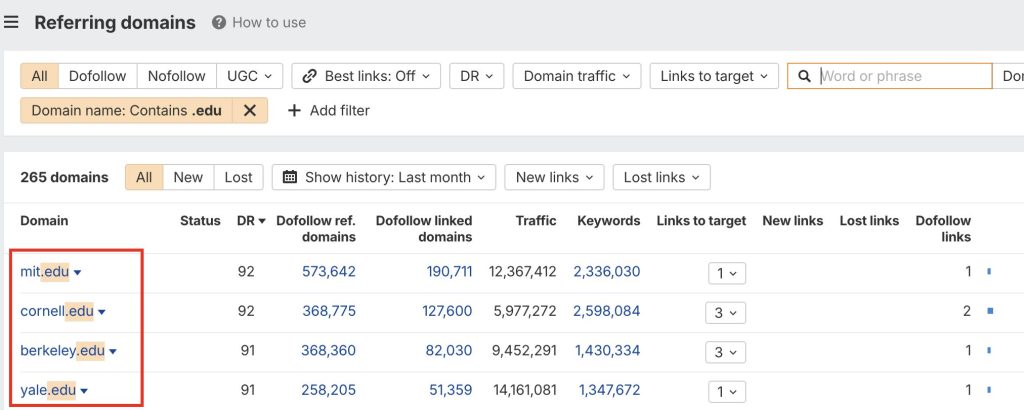
But scholarship link building is only effective when done with authenticity and strategic targeting.
Here’s the thing: universities love resources that help their students. That’s why a well-positioned scholarship (hosted on your own site) can earn backlinks from career centers, financial aid offices, and academic departments.
Why this still works in 2025:
- .EDU links = Trust Boost: Google treats .edu domains as highly authoritative.
- White-Hat Approved: You’re providing real value, not gaming the system.
- Brand Equity: Your brand becomes associated with philanthropy and education.
- Scalable Outreach: One scholarship can attract dozens of backlinks across institutions.
Here’s a quick snapshot of how it works:
| Step | Action |
| 1 | Create a scholarship with a specific theme tied to your niche |
| 2 | Publish it on your site (landing page format) |
| 3 | Reach out to colleges/universities with relevant student pages |
| 4 | Earn .edu/.org backlinks when they list your scholarship |
| 5 | Measure authority and traffic impact over 3-12 months |
This is one of the few “evergreen” link building methods that still delivers results when guest posting is overused and directory links are diluted.
Next, we’ll break down why this strategy remains one of the most white-hat, ROI-friendly link-building methods in your SEO playbook.
Why White-Hat Scholarship Campaigns Outperform Other Tactics
Scholarship link building wins because it creates natural backlinks from .edu domains backed by purpose.
Google favors links that serve users, come from reputable sources, and match intent. Scholarships hit all three. When you create a scholarship and universities list it, you’re earning links through public value not private manipulation.

Compare that to common tactics like:
- PBNs: Risky, de-indexed networks that burn domains.
- Paid Guest Posts: Expensive, oversaturated, often flagged as unnatural.
- Broken Link Building: Time-consuming with low conversion rates.
- Discount Campaigns: Less trustworthy and often treated like advertisements.
Scholarships offer high success rates with lower spam risks and long-term domain authority gains. Here’s the breakdown:
| Link Building Tactic | Risk Level | Avg. Link Quality | Cost per Link | Long-Term Value |
| Scholarship Campaigns | Low | Very High (.edu) | $$ | High |
| Guest Posts (Paid) | Medium | Medium-High | $$$ | Medium |
| PBNs | High | Low | $ | Low |
| Broken Link Outreach | Low | Medium | $$ | Medium |
| Discount Link Campaigns | Medium | Low | $ | Low |
You’re building reputation while building links and that matters to search engines and customers alike.
How To Build Scholarships That Deliver Links
Scholarship campaigns generate ROI when they’re niche-specific, professionally presented, and backed by structured outreach.
The first step is clarity on purpose. Generic scholarships get ignored. You need to craft a theme that aligns with your industry.
For example, a SaaS platform focused on AI could offer a scholarship for students building machine learning projects. A fintech startup might fund research around financial inclusion or blockchain applications.
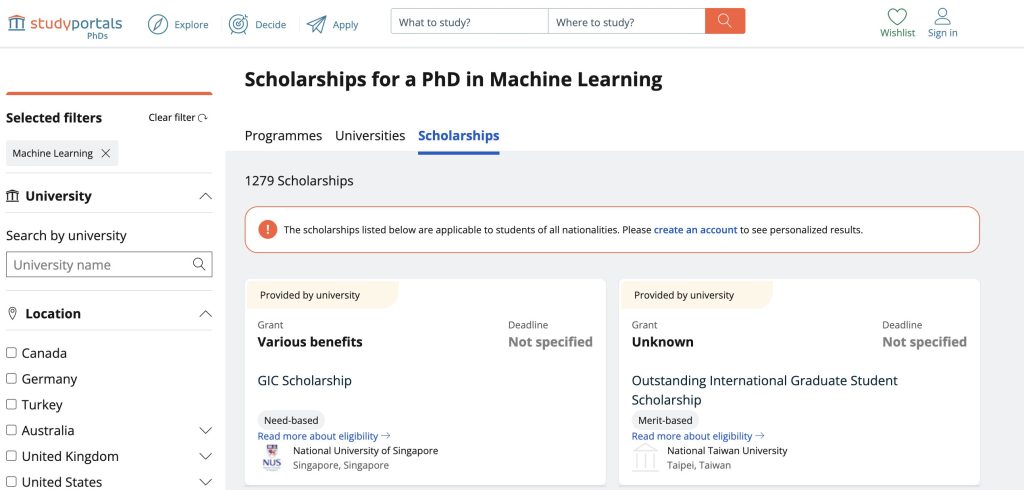
This type of niche focus makes your offer relevant and attractive to academic institutions.
Once you have a focused idea, create a dedicated scholarship landing page on your site. Keep it clean, crawlable, and professional. Include all the essentials like eligibility criteria, award amount, application process, and submission deadlines.
Make sure it’s indexable and not buried deep within your navigation. This is the anchor content that universities will link to, so it needs to convey credibility at first glance.
Now comes the outreach, and this is where most campaigns fail. Don’t mass blast universities.
Instead, curate a targeted list of financial aid offices, student resource centers, and department-specific scholarship pages.
Academic programs that align with your niche like law schools, cybersecurity departments, or eCommerce business programs are ideal. Tools like Hunter.io or Snov.io can help you find direct contacts within these departments.
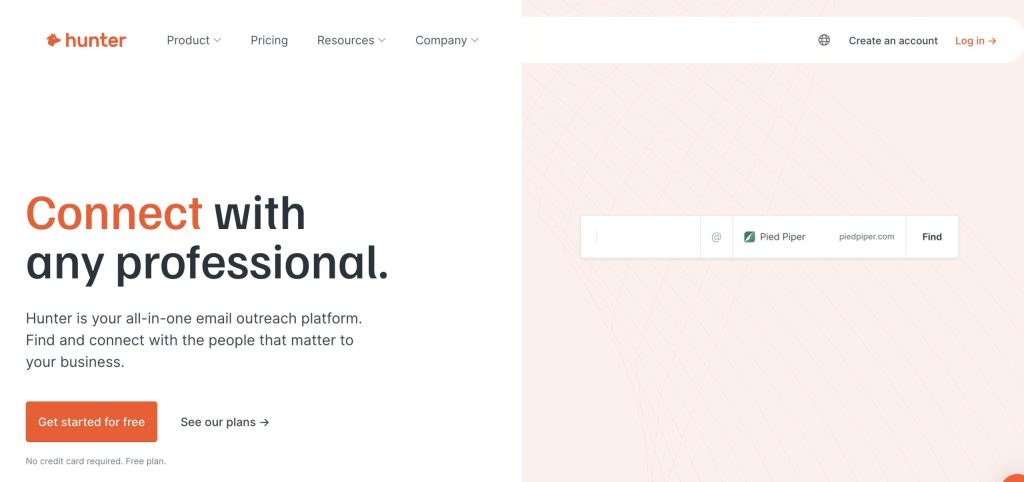
When reaching out, personalize every message. Frame your offer as a student opportunity that supports their mission.
Ask clearly and respectfully whether they would consider listing the scholarship. Keep your tone professional and purpose-driven.
Here’s how to do it step by step. No templates. No lazy tactics. Just results.
1. Define a Specific, Industry-Relevant Theme
Generic scholarships get ignored. A cybersecurity firm offering a “Women in Cyber Defense” scholarship? That gets listed.
A fintech startup offering a “Financial Inclusion in Emerging Markets” grant? That earns backlinks.
2. Publish a Clean, Credible Scholarship Page
Your scholarship page must:
- Be crawlable and indexable
- Include eligibility, deadline, and award amount
- Host an application form or clear instructions
- Look legitimate (no over-the-top CTAs)
3. Curate a Targeted Outreach List
Focus on:
- University financial aid departments
- Career centers
- Niche-specific academic departments (e.g. law schools, CS programs)
Use tools like Hunter.io or Snov.io to find decision-makers’ emails.
4. Personalize Your Outreach
Forget mass mail. Customize your emails. Example:
“Hi [Name],
We’re offering a $1,500 scholarship specifically for [Department] students interested in [Industry]. Would you consider adding it to your scholarships page? Here’s the link.”
5. Follow Up. Then Follow Up Again.
Send at least 2 follow-ups spaced a week apart. Most .edu links are earned on the second or third touch.
Results You Can Expect
- 10–30 quality .edu links per campaign
- 30–60 days average listing time
- Boosts to Domain Authority and organic keyword positions
- Brand mentions on trusted academic domains
The ROI? Consider this: 25 backlinks from .edu pages at ~$200/link value = $5,000 in link equity from one $1,000 scholarship investment.
Real Results: Case Studies in SaaS, Fintech, Ecommerce, Legal & Cybersecurity
Numbers don’t lie: these campaigns show how well-executed scholarships still help with SEO.
Mangools: The 2018 Experiment That Shocked Everyone
In a 60-day run, Mangools emailed 200 colleges, targeting pages listing external scholarships.

Their results blew past expectations: a 6% conversion rate, 12 live .edu backlinks (average DA 58), 97% email open rate, and a 12% reply rate even with impersonal outreach.
Source Supply: Scholarship + Discount, Real Impact
In year one, Source Supply told over 100 schools about their scholarship and student discount.

As a result, 50+ universities listed them on their scholarship and discount pages, driving 2,600 visitors and helping with search rankings.
Sure Oak & Responsify: Massive Scale with a Scholarship Layer
Sure Oak ran a scholarship campaign as part of a broader link-building effort for their client, Responsify.
That campaign resulted in 80+ .edu backlinks, a domain authority jump from 16 to 30, and a staggering 582% growth in organic traffic and 810% increase in monthly users.
Why This Still Works
These wins aren’t flukes. They prove that when you build a scholarship campaign purposefully with clarity, relevance, and follow-up you get dofollow links, real visibility, and site authority.
Even outreach via generic emails can convert, but your page and positioning must feel legit.
At-a-Glance Comparison
| Campaign | Outreach Scale | .edu Links Earned | Key Outcomes |
| Mangools | 200 emails | 12 | 6% conversion, high open/reply rates |
| Source Supply | 100+ schools | 50+ placements | 2.6K visits and ranking lift |
| Sure Oak | Multi-method campaign | 80+ .edu links | DA boost, massive organic traffic growth |
These real-world case studies underscore why scholarship link building deserves a spot in your SaaS link building campaigns.
It delivers high-quality .edu links, boosted domain authority, and organic growth that other tactics can’t match.
Step-by-Step: How To Build Scholarship Links by Industry
Legal: Build Trust Through Advocacy
Scholarship Idea: “Future Advocates for Equal Justice” Scholarship
Legal firms win when they align with social good. A scholarship focused on civil rights, access to justice, or legal reform gives law firms a legitimate anchor to earn links from pre-law departments, social science faculties, and financial aid offices at universities.
Execution Plan:
- Create a landing page detailing a $1,000–$2,000 scholarship focused on students pursuing law or criminal justice.
- Include prompts such as: “Describe how you plan to use your legal education to expand access to justice.”
- Reach out to pre-law advisors, legal studies departments, and financial aid offices at ABA-accredited institutions.
- Use law school directories and .edu search operators to find listing pages.
Tip: Focus on regional law schools where your firm practices because local relevance improves link response rates.
Fintech: Tap into Financial Innovation
Scholarship Idea: “Digital Finance for the Next Billion” Scholarship
Fintech companies thrive on forward-thinking. Position your scholarship around tech-driven financial inclusion, blockchain, or mobile banking to appeal to students in finance, business, or computer science programs.
Execution Plan:
- Launch a $1,500–$2,500 scholarship tied to a specific fintech topic or emerging tech.
- Ask applicants to submit a short essay or video explaining how fintech can reshape underserved economies.
- Target business schools, economics departments, and universities with financial tech incubators.
- Use terms like “student scholarships for finance majors site:.edu” to build your outreach list.
Tip: Co-brand the scholarship with a non-profit or accelerator you partner with to boost credibility and reach.
Ecommerce: Position Around Purpose-Driven Commerce
Scholarship Idea: “Conscious Consumerism in a Digital World” Scholarship
Ecommerce brands can stand out by aligning with social causes like sustainability, ethical sourcing, or mental wellness especially if these are baked into the brand.
Execution Plan:
- Offer a $1,000 scholarship for students studying marketing, sustainability, or digital retail.
- Have applicants explore how DTC brands can drive social change through online commerce.
- Reach out to marketing departments, entrepreneurship centers, and green business programs.
- Include your scholarship in national scholarship aggregators and .edu databases.
Tip: Feature past winners on your blog to build long-term SEO equity and brand trust.
SaaS: Showcase the Future of Tech
Scholarship Idea: “SaaS Solutions for Real-World Impact” Scholarship
SaaS companies can lean into innovation. Think healthcare platforms, AI tools, B2B automation. Target students building tech that solves real problems.
Execution Plan:
- Develop a $2,000 scholarship for students in software engineering, data science, or IT.
- Frame the application around creating software solutions for global or local challenges.
- Build your outreach list around top CS programs, coding bootcamps, and tech incubators.
- Emphasize your own company’s mission in the tech space to add authenticity.
Tip: Add optional submission formats like GitHub repos, code samples, or case studies – this resonates in the dev world.
These industry-specific campaigns go beyond filler.
They’re strategic, aligned, and high-converting designed to earn authoritative backlinks and make your brand memorable in the academic space.
Why Relevance & Legitimacy Are Non-Negotiable
.EDU links are powerful but they’re picky. If your scholarship isn’t relevant or legit, it gets ignored or even worse it gets flagged.
Here’s the hard truth: universities get pitched dozens of scholarship links a month. Most of them? Junk.
Thin pages, vague criteria, or offers that smell like SEO traps. That’s why your campaign needs to feel authentic and professionally positioned from the start.
Relevance is your first gate. A cybersecurity firm sponsoring an essay contest on quantum finance? No thanks.

But that same firm offering a grant for ethical hacking research? That fits. The scholarship must connect directly to your brand’s purpose, or to the student’s field of study.
Then comes legitimacy. Your page needs to look like it belongs on an academic site. Use a clean layout, no pop-ups, no aggressive CTAs.
Include full eligibility criteria, deadlines, award amounts, and application instructions. List past winners if you’ve run the campaign before. The goal is trust.
Studies like “The Impact of Backlinks on Search Engine Rankings” confirm that links from authoritative domains (.edu, .gov) correlate with higher rankings.
And don’t fake it. Universities will vet your domain. They’ll check your homepage, your About page, even your LinkedIn. If your brand looks spammy, your scholarship email goes in the trash.
Want the edge? Go beyond the basics. Host a panel of judges. Offer mentorship or internship opportunities.
Feature winners on your blog. These details turn a $1,000 link play into a university-backed asset.
Google notices too. Legitimate backlinks surrounded by relevant content on real university pages do more than boost rankings, they build a moat around your domain authority.
What Makes Scholarship Link Building Worth It
Scholarship link building works when it aligns with your brand, has clear ROI targets, and gets executed like a campaign.
If you’re in a competitive, trust-based industry like SaaS, fintech, legal, or cybersecurity, a single .edu backlink can outweigh ten mediocre guest posts.
That’s because .edu domains carry unmatched authority. When they link to you, it tells Google: “This site is trusted by academic institutions.” That trust converts into rankings. Rankings convert into traffic. Traffic becomes a pipeline.
But this isn’t plug-and-play. It takes real work.
You need time to plan a compelling offer, design a professional landing page, build a qualified outreach list, and follow up like a salesperson not a spammer.
And that’s before the links even come in. Once they do, you still need to monitor results, measure rankings, and calculate ROI.
Here’s where it pays off:
- You want high-authority, evergreen backlinks (.edu).
- You’re in a regulated or high-trust niche.
- Your team can handle cold outreach or you have agency support.
- You’re building long-term organic growth.
And here’s when to skip it:
- You’re selling low-ticket, fast-turn products and need quick SEO wins.
- You don’t have capacity to manage outreach and follow-ups.
- Your brand doesn’t align naturally with student or academic interests.
- You’re looking for short-term, transactional results.
Scholarship link building is a long game. The links stick. The authority builds.
The strategy compounds but only if you treat it with the same precision as a sales campaign.
Conclusion: Scholarship Link Building Belongs in Your SEO Strategy
If you want links that last, links that matter, and links that move rankings – scholarship link building delivers.
It’s not the easiest tactic. It’s not the fastest. But it is one of the most consistent, white-hat, ROI-driven link-building methods left in the game.
When done with relevance, clarity, and purpose, it earns backlinks from the most trusted domains on the internet: .edu sites.
For SaaS brands, fintech disruptors, legal firms, and ecommerce companies, it’s a chance to build brand trust and domain authority at the same time.
You’re not just giving away money. You’re trading $1,000 for a portfolio of high-authority links that Google respects and competitors can’t replicate.
And the real kicker? It’s scalable. One scholarship page, dialed in with clean outreach and university-grade legitimacy, can return results for years.
FAQ: Scholarship Link Building
Does scholarship link building still work in 2025?
Yes. Universities still list relevant scholarships, and .edu links remain SEO gold. The key is relevance, authenticity, and targeted outreach.
How much should I budget for a scholarship campaign?
Plan on $1,000–$2,500 for the award itself, plus team hours or agency support for outreach and management.
How long does it take to see SEO results?
Most campaigns show link placements within 30–90 days. Ranking improvements follow after 2–4 months, depending on your industry.
Can I run this without a team?
Yes, if you can handle outreach and follow-up consistently. Otherwise, hire an agency experienced in white-hat link building.
What industries benefit most?
Fintech, SaaS, legal, cybersecurity, healthcare, and ecommerce all trust-based or competitive spaces where .edu links move the needle.
Are .edu links better than guest posts?
For authority, yes. One .edu link can carry the same weight as 5–10 average guest posts, especially on outdated or spammy sites.
Will Google penalize me for this?
No, if done ethically. You’re providing value, not buying links. Just avoid manipulative language and irrelevant outreach.
Should I run this more than once?
Absolutely. Make it an annual program. The longer it runs, the more universities list it, the more SEO value you stack.





 Start the conversation