


You’ve optimized your site speed. Your content is airtight. Maybe you’ve even nailed that pesky technical SEO checklist.
But if you’re not auditing your backlinks regularly, you could be sitting on an unseen SEO liability-or missing out on a serious ranking opportunity.
You assume your link-building efforts are “good enough.” You trust that a high Domain Rating or a growing link count is all it takes.
But here’s the truth: without regular, strategic backlink audits, you could be sitting on a pile of toxic links, missed opportunities, and stagnating authority.
This guide breaks down the backlink audit process specifically for SaaS, B2B, and tech brands. You’ll learn how to clean up your link profile, strengthen your authority, and protect your site from penalties-while finding hidden gems to double down on.
Key Takeaways
- Backlink audits help you identify and remove harmful links that can damage your SEO performance.
- They also highlight your most valuable links-so you can replicate and scale what’s working.
- Regular audits prevent algorithmic penalties and manual actions from Google.
- Ideal for SaaS, B2B, and service-based sites where quality outweighs quantity.
- Audits are foundational-not optional-if you’re serious about long-term organic growth
What is a Backlink Audit?
A backlink audit thoroughly evaluates all links from external websites pointing back to your site. By closely examining referring domains linking to your site, the goal is to determine the quality and relevance of those backlinks.
The process analyzes exactly where your backlinks originate from, the anchor text, and more importantly, spots any questionable toxic backlinks potentially creating issues or even leading to penalties from Google.
More specifically, a quality backlink audit identifies:
- Total number of external backlinks: The comprehensive number of other sites linking back to your content. More quality backlinks signal authority, but that doesn’t mean domains with low DA/DR metrics should be disregarded.
- Referring domains: The root domains sending you backlinks, assessing their strength. Links from authoritative sites pass more value.
- Anchor text distribution: The types of anchor text used in links to analyze optimization levels. Too many instances of anchor text that exactly matches keywords puts you at risk for penalties.
- Spam score percentages: The overall proportion of links that are classified as suspicious or low-quality to quantify risk on that front.
- Toxic backlink sources: Any spammy, paid link networks, or sketchy tactics inflating link counts inauthentically. These require disavowal – a process that we’ll explain in more detail in a few minutes.
Essentially, backlink audits examine all these factors to identify whether the links are valuable or harmful.
Harmful links drag down your site’s integrity and domain authority in the eyes of Google, reducing the ranking of your website and dragging it down in terms of search results.
Why Conduct a Backlink Audit?
A detailed backlink audit can give you a gold mine of info that can significantly impact your SEO and backlink strategy. For starters, it can help you to create high-quality links and outperform your competitors in search rankings.
Additionally, a regular backlink audit helps you understand what is happening in the background so you can deal with problems before they arise.
Without a regular backlink audit, many things can happen without you noticing. For instance, valuable types of backlinks driving authority to your site could disappear without you even noticing.
Even worse, a competitor might build pornographic or casino links to your content, which is a matter that must be addressed with the utmost urgency.
These unreliable or manipulative links hurt your search engine rankings and credibility over time. Google wants to see natural links coming to your site because other sites find your content helpful.
Links from low-quality sites can make it look like you artificially inflate rankings by participating in shady linking schemes.
At best, lots of bad backlinks dilute the power of your good links. But they could also trigger manual spam actions and penalties from Google.
Getting hit with a penalty takes a major toll, causing your site to plummet or even disappear from search results.

Staying on top of your link profile with regular audits helps you catch issues early and take corrective actions.
How To Prepare for a Backlink Audit
Preparing for a backlink audit is best described as a systematic approach to ensure you have the right tools and processes in place.
First and foremost, you’ll need access to robust SEO platforms that specialize in backlink analysis. Some of the industry favorites include Ahrefs, Moz, and Semrush.
You could also use Google Search Console for free, but it doesn’t provide the granular level of detail necessary for a more complete analysis.
A paid tool offers unique features that can help you identify new and lost backlinks, evaluate the quality of backlinks, and understand your competitors’ backlink profiles.
Then, before diving into the audit itself, prepare a spreadsheet where you can track your findings.
This spreadsheet should include columns for the URL of the backlink, the anchor text used, the linking page’s authority score, and notes on the quality of the backlink.
This framework will help you systematically assess each backlink and make informed decisions on which ones to keep, which backlinks to disavow, and where there are opportunities for new ones.
You should also have a clear goal of what you want to achieve with your backlink audit. Common goals include:
- Identifying and removing toxic backlinks
- Discovering lost or broken backlinks to reclaim valuable lost link equity
- Evaluating the quality and relevance of existing backlinks
- Analyzing competitor backlink profiles to uncover new link-building opportunities and strategies.
- Detecting any patterns of unnatural link acquisition that could lead to search engine penalties.
Last, but not least, try to collect historical backlink data for your website. This data can provide insights into how your backlink profile has evolved over time.
Likewise, historical data can help you measure the impact of your backlink strategies and guide future efforts.
Step-by-Step Backlink Audit Process
Let’s walk through a modern backlink audit workflow built for SaaS and B2B marketers.
Step 1: Collect Your Backlink Data
To collect backlink data use tools like:
- Ahrefs
- SEMrush
- Google Search Console
- Majestic
- CognitiveSEO (for toxicity scoring)

Export your backlink profile into a spreadsheet or backlink audit tool to centralize the data.
Step 2: Check for Obvious Toxicity
Use SEMrush’s Toxic Score or Ahrefs’ Spam Score to flag:
- Links from link farms
- Domains with no organic traffic
- Links from unrelated niches
- Excessively optimized anchor text
- Site-wide links (often from themes or widgets)

Filter for domains with high toxicity or zero traffic. These are red flags.
Step 3: Categorize by Domain Type and Relevance
Group links into categories:
- Editorial/natural mentions
- Guest posts
- Forum/comments
- Directories
- Press releases
- Syndication networks
Then assess:
- Is the site relevant to your niche?
- Does it look legit (real authors, design, no ads overload)?
- Is the content around your link high-quality?
If not – it may be worth disavowing.
Step 4: Analyze Anchor Text Distribution
Google expects a natural mix:
- Branded Anchors (Your Company)
- Naked URLs (https://yourdomain.com)
- Generic (“click here”)
- Keyword-rich Anchors (Risky if overused)
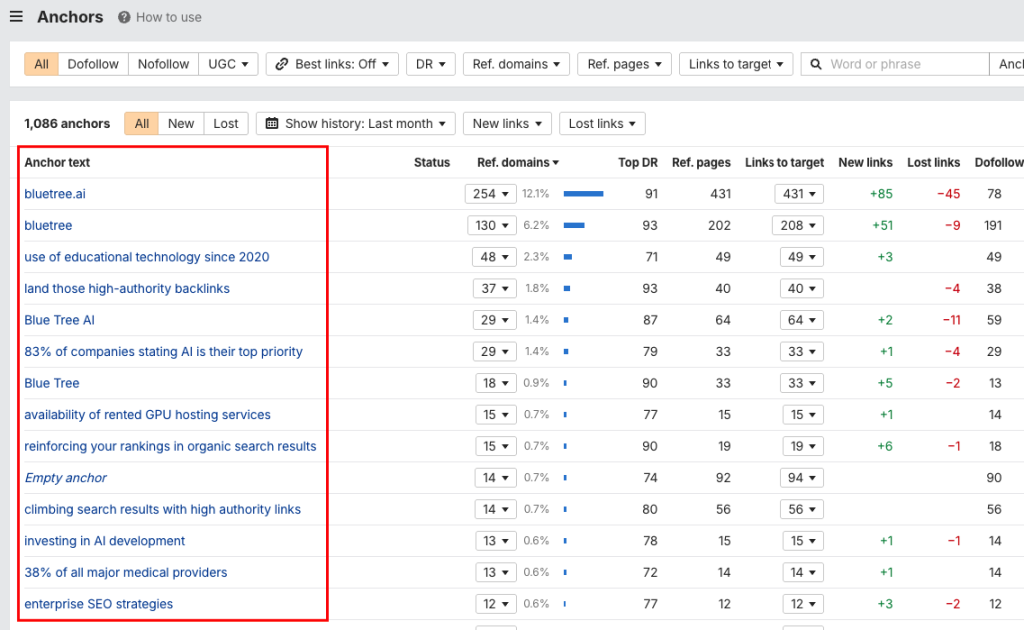
A healthy profile should be 60-80% branded or generic. If keyword anchors dominate, especially on sketchy domains – it’s time to clean up.
Step 5: Identify Link Opportunities (Not Just Risks)
Don’t just remove bad links-double down on good ones.
- Which domains link to you multiple times?
- What anchor texts do they use?
- What pages get the most links?
Look for patterns in your strongest links. Then:
- Pitch those domains again with new content
- Use similar formats for future link-building (e.g. comparison pages, statistics posts)
Step 6: Decide What to Remove vs. Disavow
Remove: Reach out to webmasters and ask for removal if the link is clearly spam or harmful.
Disavow: Use Google’s Disavow Tool for links you can’t remove manually but still want to ignore.
This is how a disavow file looks like on a domain level

Warning: Only disavow if you’re confident the link is hurting your site. Overuse can damage authority.
How To Identify and Handle Toxic Backlinks
By the time you complete the process above, you will have been able to identify good links and toxic/spammy links. A link is toxic if it:
- Originates from an irrelevant or unrelated site
- Uses excessive keyword stuffing in anchor text
- Comes from a site with a history of spam behavior
- Uses sneaky redirects or tactics to manipulate metrics
Impacts of Toxic Links
A few toxic backlinks may merely dilute your positive backlink equity. However, a larger amount can seriously damage your site’s authority and rankings. Google will see unnatural link-building practices and distrust your content.
Toxic backlinks also carry the risk of manual spam actions if found to be part of intentional manipulation efforts. Penalties can ban your pages or entire domain from search results.

To help you identify toxic backlinks, we’ve come up with a shortlist of questions you should ask yourself when evaluating a backlink:
- Is the link from a low-authority site?
- Does the link come from a spammy site or one that is irrelevant or unrelated to your content/niche?
- Is the anchor text used in the link unnatural or over-optimized?
- Does the link come from a search engine-penalized site?
- Do you have too many links from the same domain?
- Do many of the linking pages have very little content?
- Is the link flagged as spammy by Ahrefs or SEMrush?
Once the bad apples have been identified, it’s time to remove them. To do this, try contacting the website owners to remove the links.
If they don’t respond or refuse, you can use Google’s Disavow Tool to tell Google to ignore these links when assessing your site. To complete the process, you must:
- Create a .txt file with URLs or domains of backlinks to disavow, one per line.
- Format whole domains as “domain:example.com”.
- Open your Google Search Console and access the Disavow.
- Select your site and upload the file.
- Submit to tell Google to ignore these links.
What are the Best Practices for Backlink Audits
Backlink audits are essential for maintaining the SEO health of your website and finding new opportunities for improvements.
However, this is far from a one-and-done affair – to get the best results from this strategy, there are a couple of key considerations that should be kept in mind.
Maintain a Routine Backlink Audit Schedule
Establish a routine schedule for your backlink audits – monthly, quarterly, or bi-annually, depending on your website’s size and the scale of your link-building efforts. Use calendar reminders to stay on track with these audits without fail.
Set up Google Alerts for your website’s name or domain.
This can help you passively monitor new backlinks as they are created, alerting you to both opportunities and potential issues in real time, allowing you to respond swiftly, prevent backlogs, and get ahead of problems before they even arise.
Ongoing Monitoring and Analysis
By developing a proactive approach and continuously assessing the quality of incoming links, you’ll gain a treasure trove of actionable data that can be leveraged to further optimize your SEO strategies.
Ongoing monitoring and analysis allow you to both identify and resolve issues and give you the agility to adjust your efforts in real time.
Think of it this way – if your analysis shows that certain types of content that you’ve published outperform other types by a significant margin, you can more efficiently allocate resources to where you’ll get the biggest bang for your buck.
Staying Updated with Search Engine Algorithms
Search engine algorithms evolve constantly, and what works today might not work tomorrow. Keep your ear to the ground regarding the latest algorithm updates from Google and other search engines to understand how they might affect the evaluation of backlinks.
Be prepared to adapt your link-building and backlink maintenance strategies based on the latest algorithm changes.
This might involve focusing more on the quality rather than the quantity of backlinks or revising the types of sites you generally target for backlinks.
Advanced Techniques and Strategies
Here are some advanced backlink auditing strategies and emerging technologies to take your efforts to the next level:
Conduct Competitor Link Audits
Leverage backlink analysis tools to pull your competitors’ entire backlink profiles. Review their links sorting by domain authority, anchor text ratios, referral URLs, and other attribution.
Then, try to identify current high-quality sites linking to them that you could potentially earn links from as well. See what anchor text variants and pages they are optimizing.
You can also use backlink analysis tools to automatically pinpoint where competitors are gaining significant equity-passing links that your site has yet to obtain.
For example, if you find that most of your competitors have great backlinks from .edu domains, you can develop an outreach campaign focused specifically on getting .edu links to fill this performance gap quickly.
Leverage AI for Your Link-Building Efforts
Machine learning and AI are making it easier to handle backlink audits by automating the detection of good and bad links.
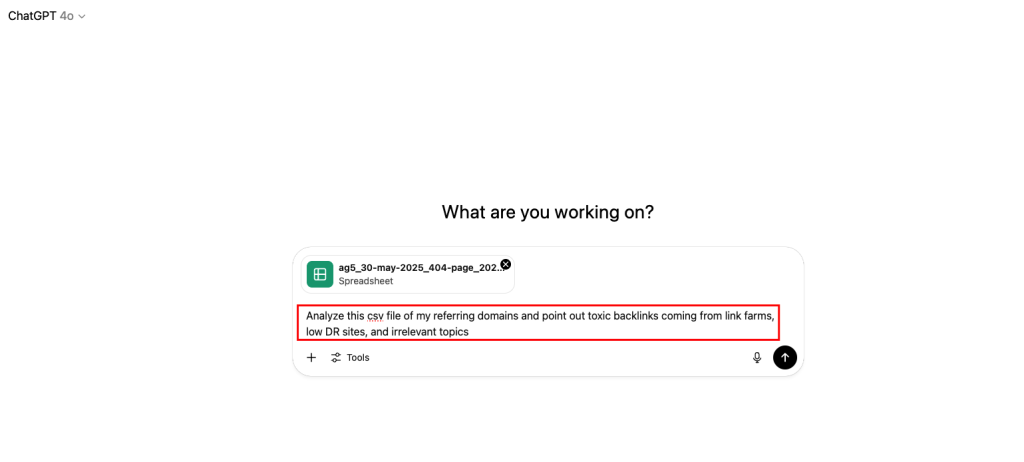
While the notion of AI-aided web scraping is a controversial topic, there are plenty of tools that can automate the research part of link building.
As technology improves, your SEO role will shift towards analyzing these automated insights to make smarter decisions. This means less manual work for you and a more effective approach to managing your site’s backlinks.
Conclusion
Backlink audits aren’t a one-time fix-they’re an ongoing pillar of SEO success. For SaaS and B2B brands, they safeguard your rankings, improve your authority, and help you scale what’s working while removing what’s hurting you.
If you’ve never done one-or it’s been more than 6 months-there’s no better time to start than now.
Don’t let bad links bury good content. Take control of your authority, one audit at a time.
FAQs – Backlink Audit
What is a backlink audit?
A backlink audit is a full review of all the links pointing to your website, aimed at identifying harmful links, preserving strong ones, and improving your site’s off-page SEO health.
How often should I perform a backlink audit?
At least every 6 months-or quarterly if you’re actively building links or operating in a competitive niche.
What tools should I use for backlink audits?
Use Ahrefs, SEMrush, and Google Search Console for data collection. Tools like Link Research Tools or CognitiveSEO help with toxicity scoring.
Should I disavow all low-quality links?
No. Only disavow links that are clearly unnatural, toxic, or harmful. When in doubt, consult with an SEO professional.
Can a backlink audit improve rankings?
Yes-by removing bad links and identifying high-performing ones to replicate, audits often lead to higher rankings and better domain authority.





 Start the conversation